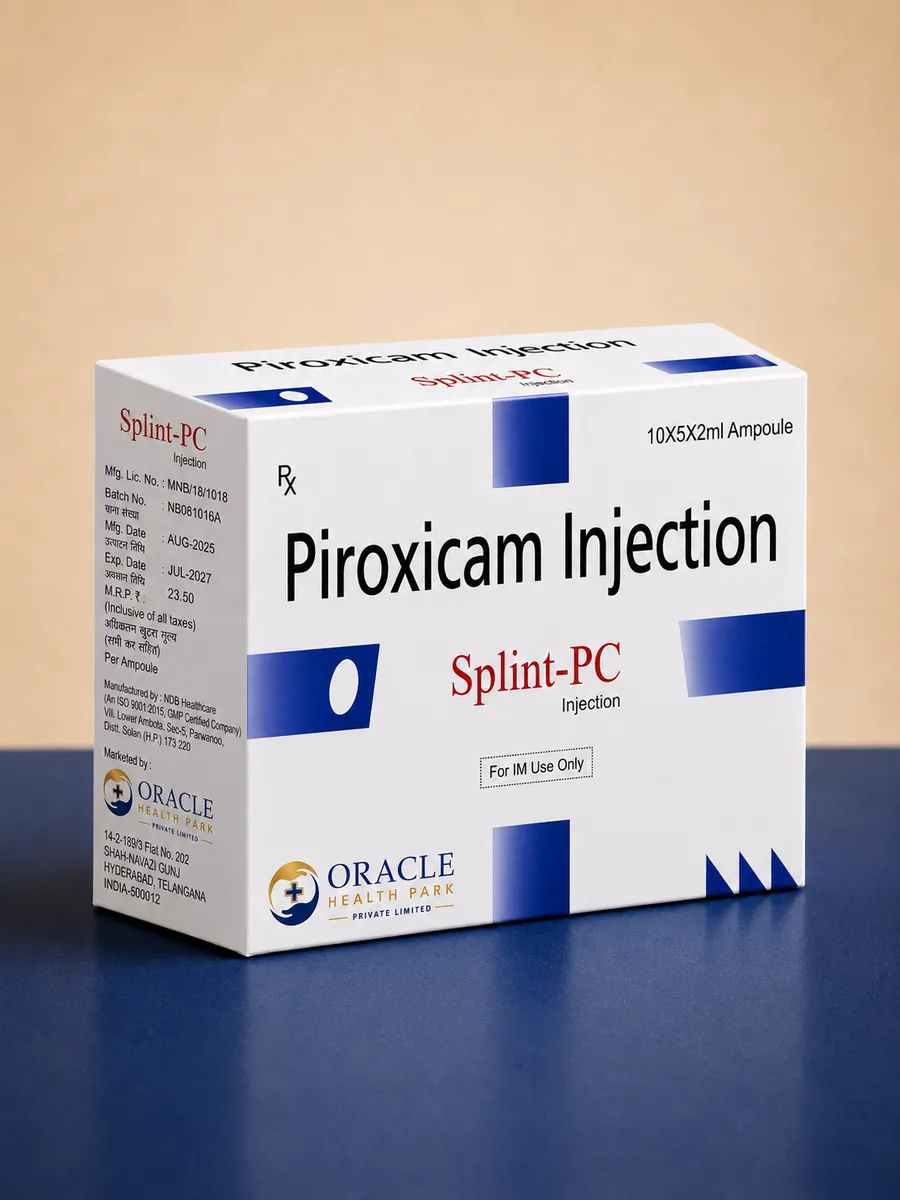
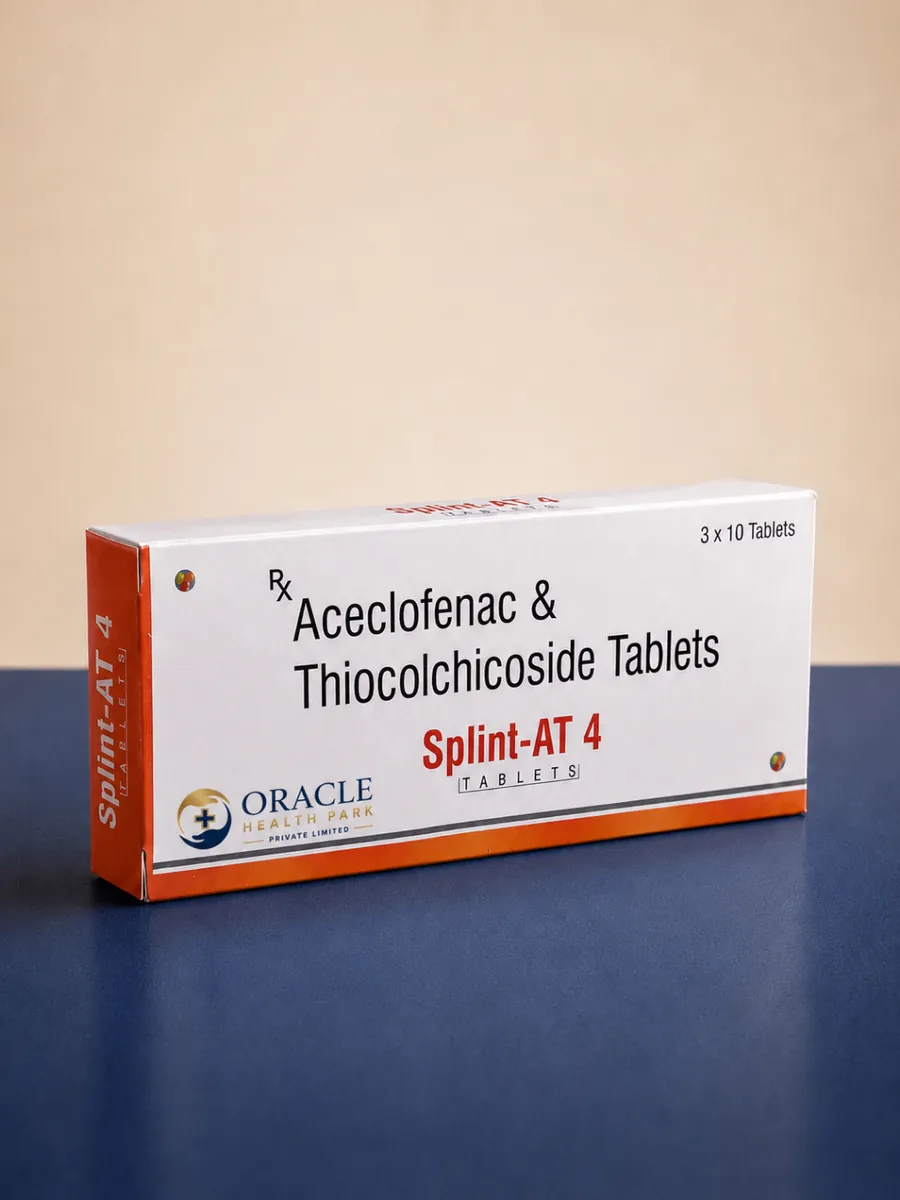
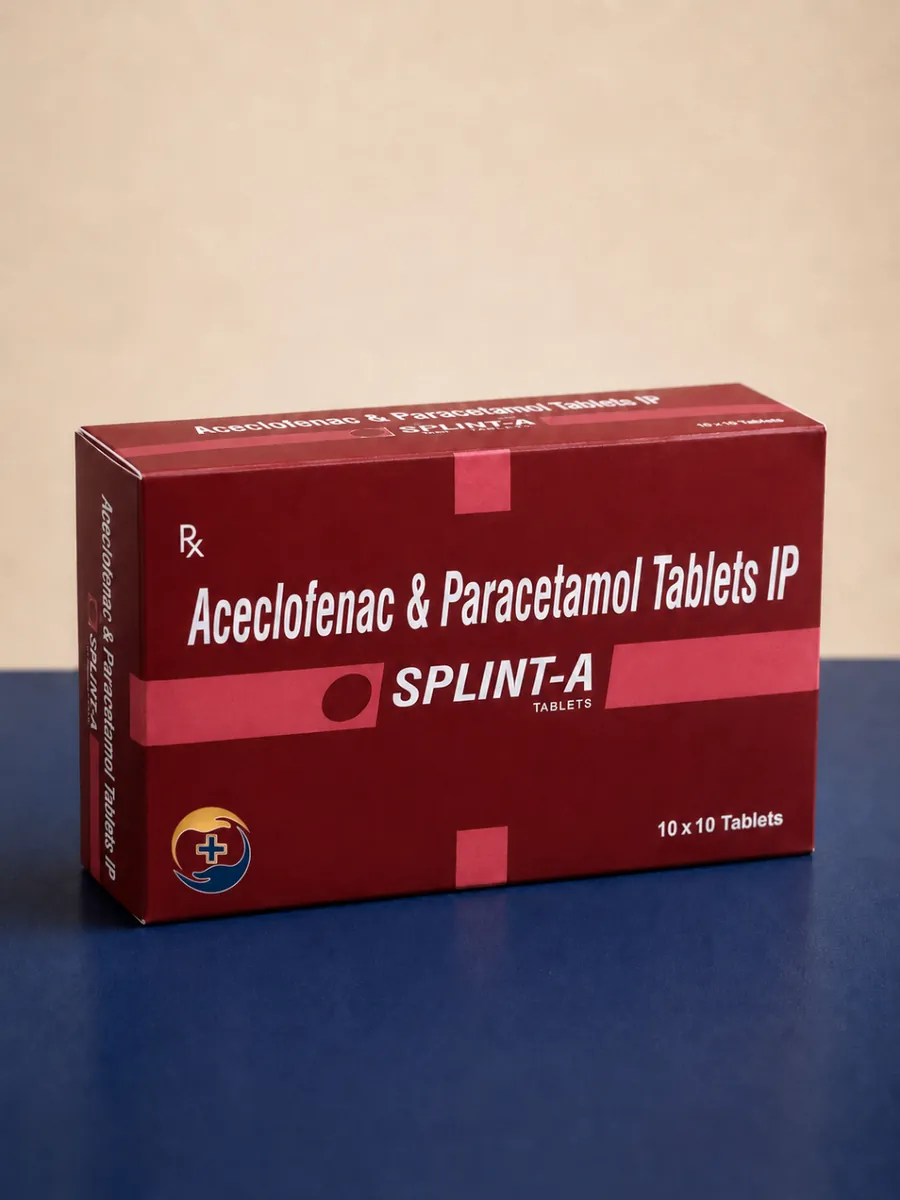
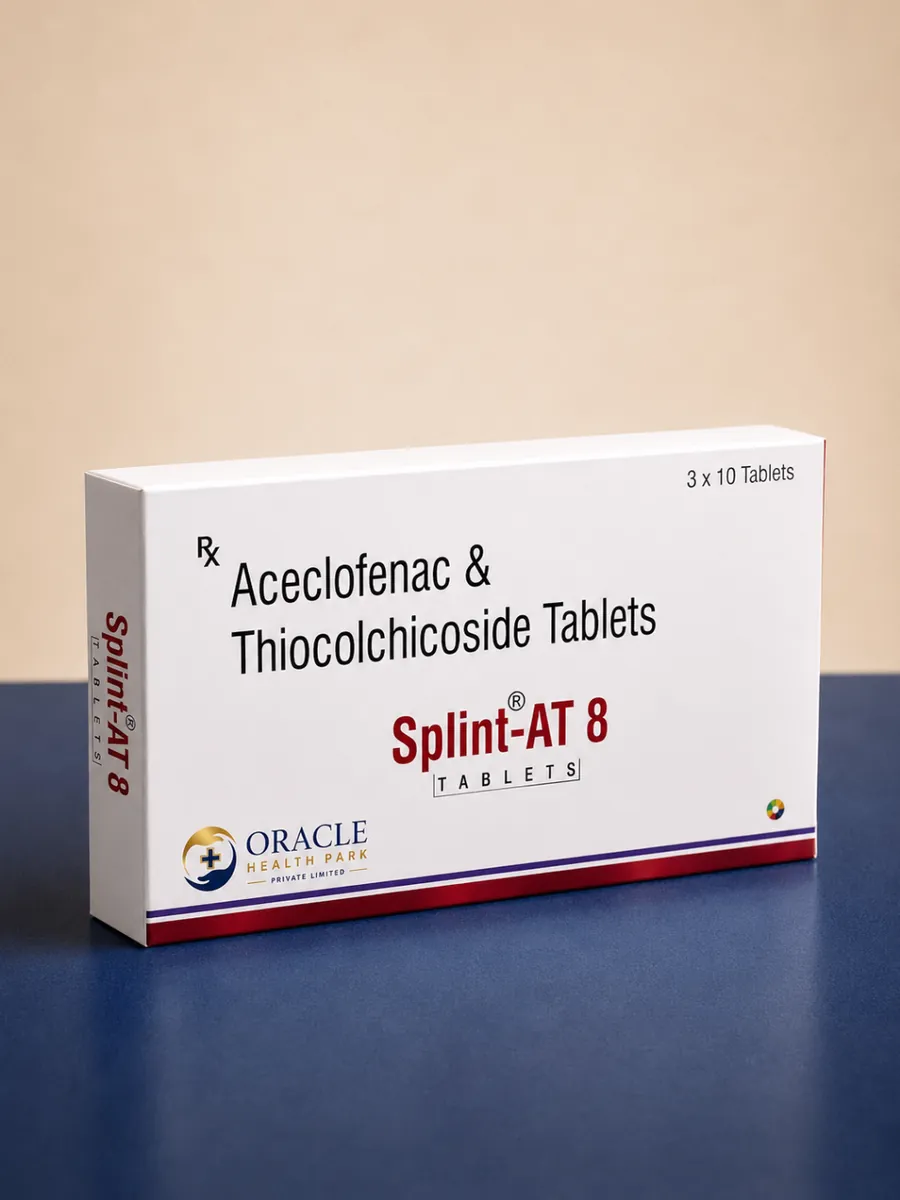
Splint-AT-8mg pack shot
Dosage Form
Film-coated tablets
Pack Size
10 x 3 Tablets
SPLINT-AT 8 Tablets

Splint-AT-8mg

Thiocolchicoside 8 mg + Aceclofenac 100 mg

Stronger muscle-spasm and pain relief

SPLINT-AT 8 doubles the muscle relaxant strength of SPLINT-AT 4. It is used when the muscle spasm is severe — for example, an acute back attack that stops normal movement.

Aceclofenac reduces the swelling and pain, while the higher-strength Thiocolchicoside releases the muscle grip more effectively.

Educational content only. Not intended to diagnose, treat, cure or prevent any disease. Consult your physician before use.

// Chapter 01 — Key Benefits

Why it matters

  • 01Higher muscle-relaxant strength
  • 02Rapid relief from severe spasm
  • 03Reduces inflammation and pain
  • 04Restores movement faster in acute pain
// Chapter 02 — Composition

What's inside

Each film-coated tablet contains:

// Chapter 03 — How it works

Mechanism of action

A simple, plain-language walkthrough of each active ingredient.

Step 01

Thiocolchicoside

Higher dose gives stronger release of muscle tightness through the nervous system.
Step 02

Aceclofenac

Reduces pain and swelling by blocking prostaglandin production.

// Chapter 04 — Clinical Advantages

Why physicians choose it

  • For patients whose spasm is not controlled by lower-dose combinations.
  • Short-course therapy — typically 3–5 days.
  • Convenient twice-daily dose.
// Chapter 06 — Dosage

How to take it

  • One tablet twice daily after meals for a short course (usually 3–5 days).
  • Reduce dose or switch to lower strength as pain improves.
// Chapter 07 — Storage

How to store it

  • Store below 25°C, away from moisture.
// Chapter 08 — Safety

Important to know

  • Higher risk of drowsiness — avoid driving.
  • Take with food.
  • Avoid in pregnancy, breastfeeding, active stomach ulcers, severe kidney or liver disease.
// Chapter 09 — Side Effects

Possible side effects

Most people take this without trouble. If something does happen, it is usually mild and settles on its own.

Usually mild

  • Stomach pain, acidity or nausea
  • Loose motions or indigestion
  • Dizziness or headache
  • Mild drowsiness
  • Muscle weakness or a heavy, relaxed feeling

Call your doctor right away

  • Black or tarry stools, vomiting blood, or severe stomach pain
  • Swelling of the face, ankles or sudden weight gain
  • Breathlessness, wheezing or chest pain
  • Yellowing of eyes or skin, or very dark urine
  • Skin rash with blisters or peeling
// Chapter 10 — Precautions

Who should be careful

  • Always take it after food with plenty of water — never on an empty stomach.
  • Use the lowest dose for the shortest time that controls your pain.
  • Tell your doctor about ulcers, acidity, asthma, kidney or liver disease, high blood pressure or heart problems.
  • Avoid in the later part of pregnancy; discuss breastfeeding with your doctor.
  • Elderly patients and people on long-term therapy need periodic kidney, liver and blood-pressure checks.
// Chapter 11 — Interactions

What to avoid while taking it

  • Do not combine with other painkillers of the same family (ibuprofen, diclofenac, naproxen) — the stomach risk multiplies.
  • Alcohol sharply increases the chance of stomach bleeding — avoid it.
  • Tell your doctor if you take blood thinners, steroids, water tablets (diuretics), blood-pressure medicines or methotrexate.
  • Stay well hydrated; dehydration puts extra strain on the kidneys with these medicines.
// In summary

Higher-strength Thiocolchicoside + Aceclofenac for severe muscle spasm and acute pain.

Educational only. Short-course prescription therapy.

// FAQ

Questions

Will Splint-AT-8mg make me drowsy?+

The muscle relaxant part can cause mild drowsiness — avoid driving until you know how it affects you.

Can I take it on an empty stomach?+

No. Always take it after food to protect the stomach.

How long can I use it?+

Only for the short course your doctor prescribes — usually a few days for an acute spasm.

Can I combine it with a pain balm or physiotherapy?+

Yes, external applications and physiotherapy usually complement it — confirm with your doctor.