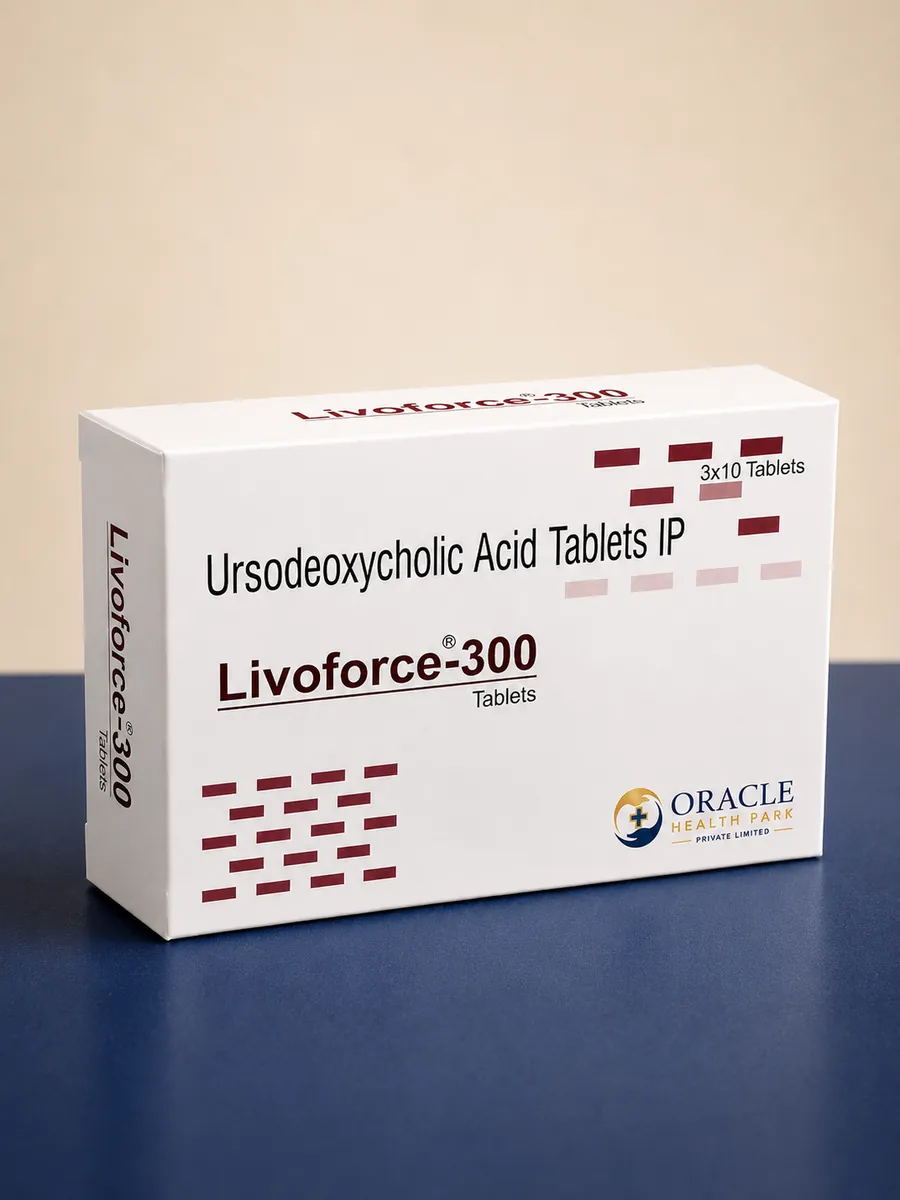
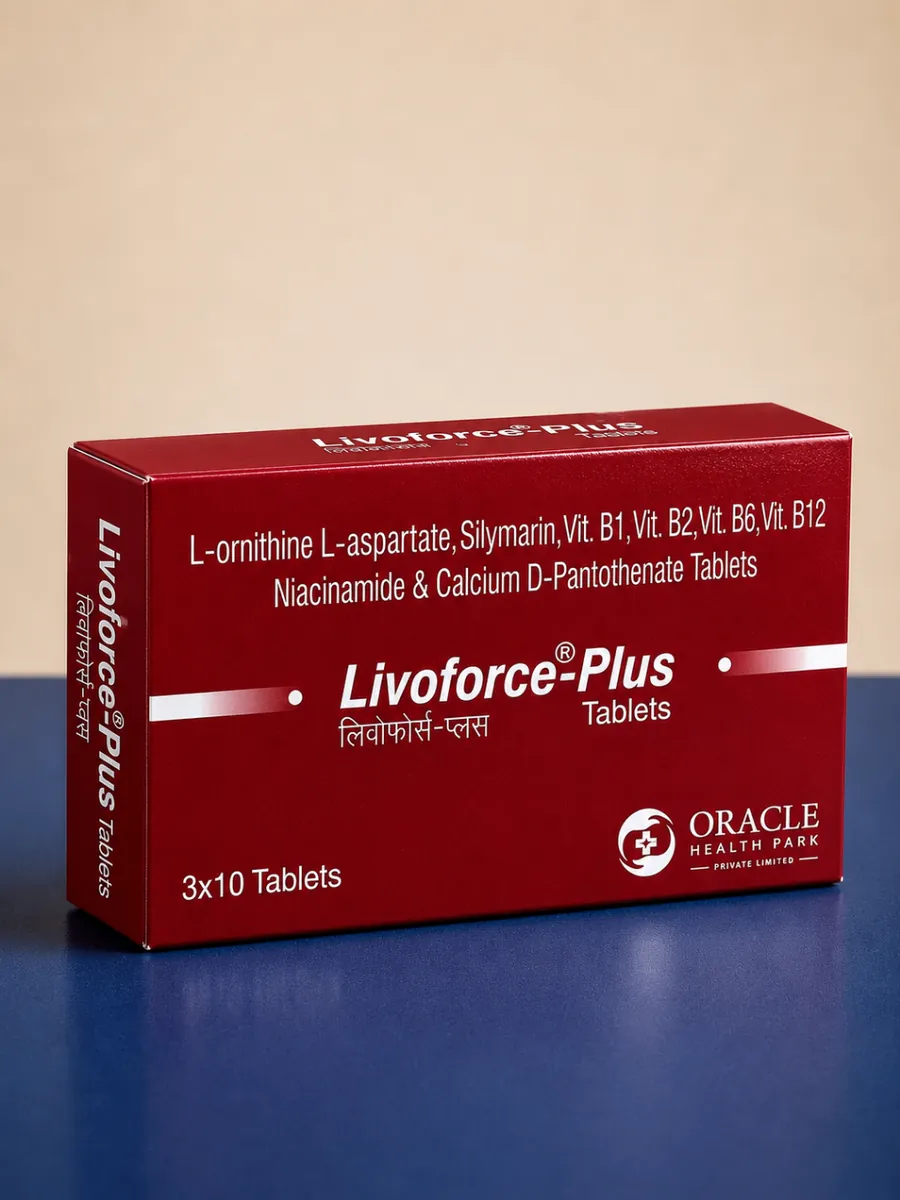
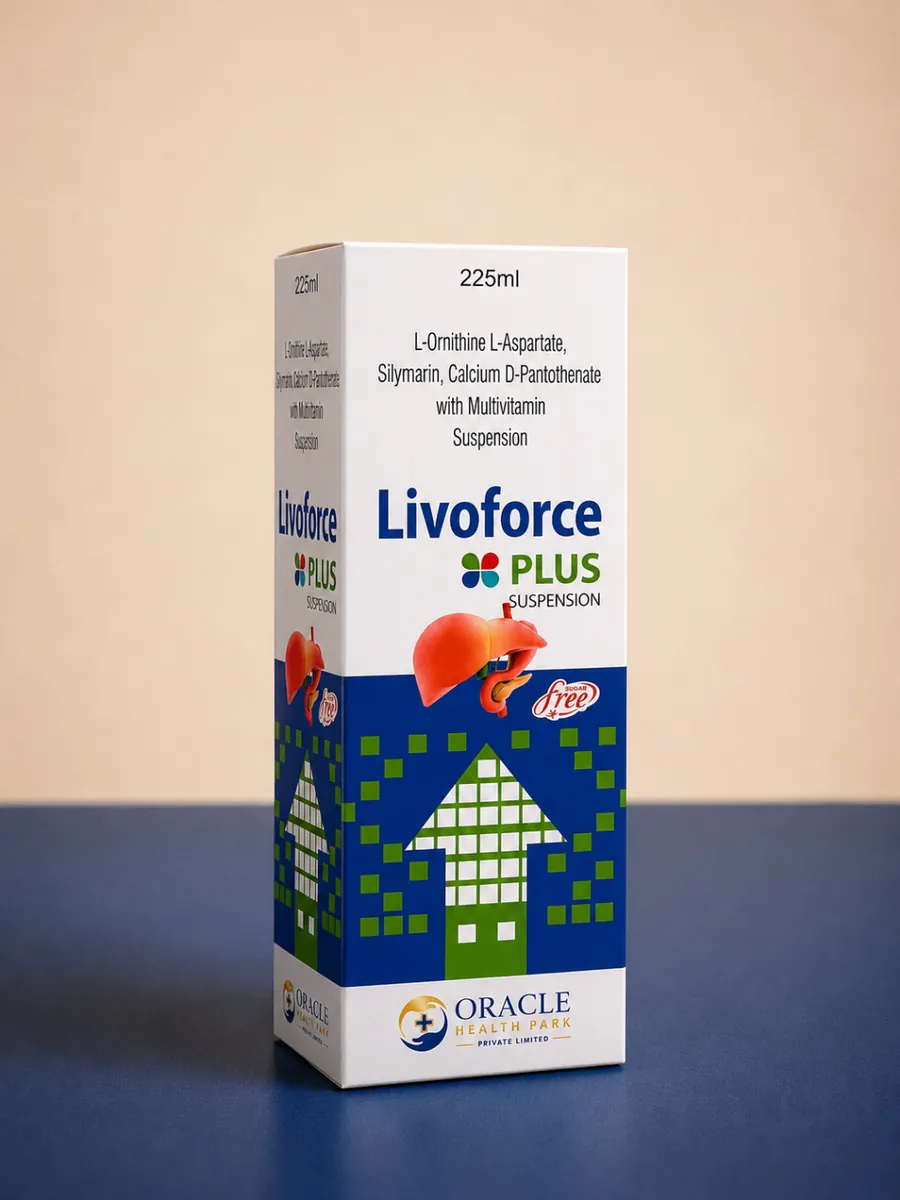
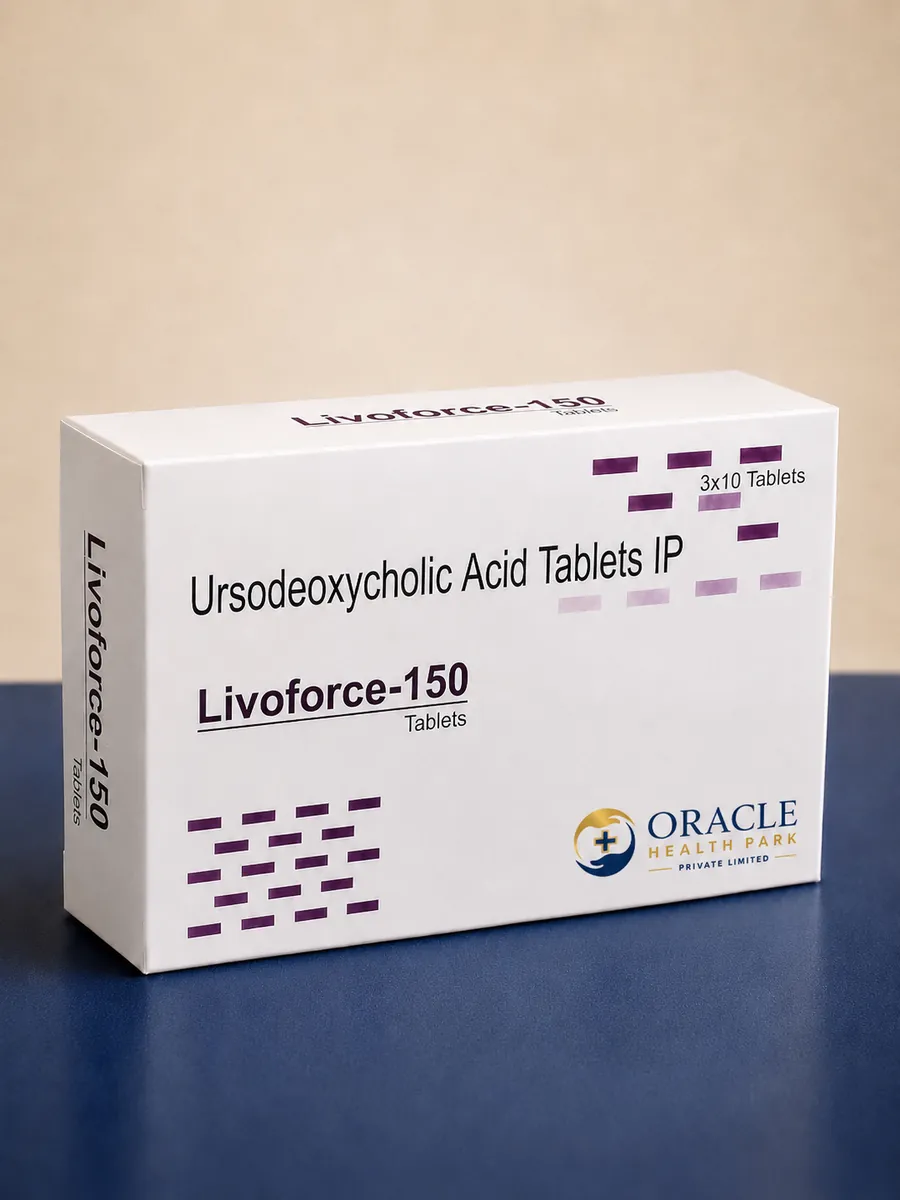
Livoforce 150 pack shot
Dosage Form
Film-coated tablets
Pack Size
10 x 3 Tablets
LIVOFORCE 150 Tablets

Livoforce 150

Ursodeoxycholic Acid 150 mg

Gentle bile-acid therapy for liver and gallbladder health

LIVOFORCE 150 contains Ursodeoxycholic Acid (UDCA), a bile acid that naturally exists in small amounts in the human body. Given as a medicine, it improves the flow of bile, protects liver cells and can slowly dissolve certain kinds of gallstones.

It is used in a range of chronic liver and gallbladder conditions where healing takes months rather than days.

Educational content only. Not intended to diagnose, treat, cure or prevent any disease. Consult your physician before use.

// Chapter 01 — Key Benefits

Why it matters

  • 01Improves bile flow
  • 02Protects liver cells from damage
  • 03Helps dissolve cholesterol gallstones over time
  • 04Well-tolerated for long-term use
// Chapter 02 — Composition

What's inside

Each film-coated tablet contains:

// Chapter 03 — How it works

Mechanism of action

A simple, plain-language walkthrough of each active ingredient.

Step 01

Ursodeoxycholic Acid

Replaces harmful, toxic bile acids with a gentler one, improves bile flow, and helps dissolve cholesterol stones by making bile less saturated.
// Chapter 04 — Clinical Advantages

Why physicians choose it

  • Non-surgical option for small cholesterol gallstones.
  • First-line therapy for primary biliary cholangitis.
  • Useful in NAFLD and drug-induced liver injury.
// Chapter 06 — Dosage

How to take it

  • Usually one tablet two to three times a day, based on body weight.
  • May need to be taken for several months.
// Chapter 07 — Storage

How to store it

  • Store below 25°C, away from moisture.
// Chapter 08 — Safety

Important to know

  • Do not use for calcium or pigment gallstones — only cholesterol stones respond.
  • Take at the same time as antacids or cholestyramine reduces absorption — separate by 2 hours.
  • Report severe abdominal pain or jaundice to the doctor.
// Chapter 09 — Side Effects

Possible side effects

Most people take this without trouble. If something does happen, it is usually mild and settles on its own.

Usually mild

  • Loose motions or softer stools (most common, usually settles)
  • Mild stomach discomfort or bloating
  • Nausea
  • Occasional itching in the early days

Call your doctor right away

  • Severe right-sided upper abdominal pain with fever
  • Worsening yellowing of the eyes or skin
  • Persistent vomiting
  • Very dark urine with pale stools
// Chapter 10 — Precautions

Who should be careful

  • Take it with or just after food — absorption is better with a meal.
  • Your doctor may repeat liver function tests to track progress; do not skip them.
  • Not suitable in complete bile-duct blockage, acute gallbladder inflammation or calcified gallstones.
  • In pregnancy it is used only when a doctor specifically advises it, such as in cholestasis of pregnancy.
  • Give the treatment time — bile-acid therapy works gradually over weeks to months.
// Chapter 11 — Interactions

What to avoid while taking it

  • Antacids containing aluminium, cholestyramine and charcoal reduce absorption — keep a 2-hour gap.
  • Tell your doctor if you take cholesterol medicines or oestrogen-containing pills, which can work against the effect.
  • Avoid alcohol completely — it directly damages the liver you are trying to protect.
  • A low-fat, home-cooked diet supports the treatment.
// In summary

Ursodeoxycholic Acid 150 mg for gallstones and chronic liver support.

Educational only. Long-term liver medicine — use under specialist supervision.

// FAQ

Questions

How long does Livoforce 150 take to work?+

Bile-acid therapy is slow and steady — most doctors review after several weeks or a few months of regular use.

Can I stop when my reports improve?+

Only your doctor should decide; stopping too early often lets the problem return.

Does it dissolve all gallstones?+

No. It can help with small, cholesterol-type stones in a working gallbladder, not with all stones.

Should I follow a diet with it?+

Yes — less oily and fried food, no alcohol, and regular meals help the liver recover.