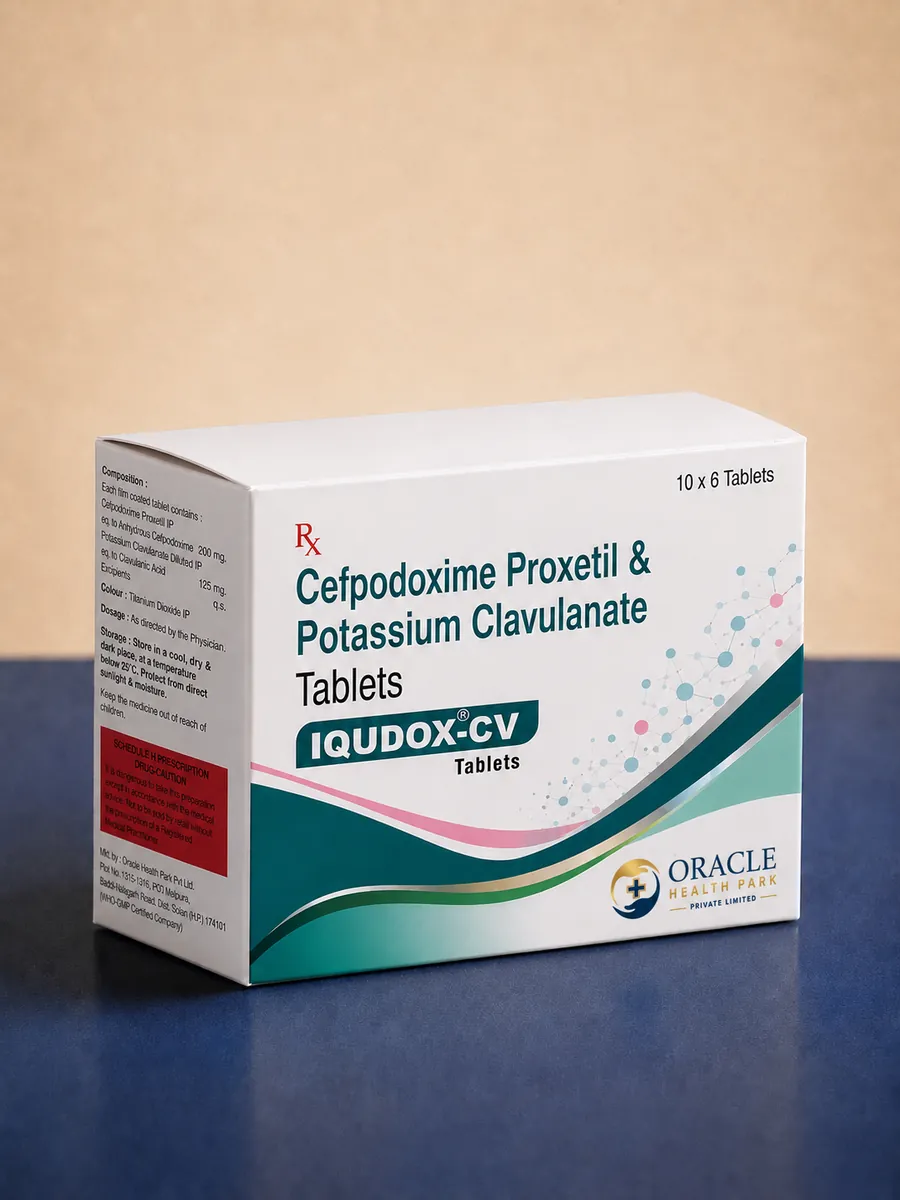
Iqudox-CV pack shot
Dosage Form
Film-coated tablets
Pack Size
10 x 6 Tablets
IQUDOX-CV Tablets

Iqudox-CV

Cefpodoxime Proxetil 200 mg + Clavulanic Acid 125 mg

Strong cover for resistant respiratory and urinary infections

IQUDOX-CV combines Cefpodoxime — a modern third-generation antibiotic — with Clavulanic Acid, which stops bacteria from destroying the antibiotic. The pair provides strong, wide-ranging coverage even when common antibiotics have already been tried.

It is a preferred choice for lower respiratory infections, pneumonia and urinary infections where resistance is suspected.

Educational content only. Not intended to diagnose, treat, cure or prevent any disease. Consult your physician before use.

// Chapter 01 — Key Benefits

Why it matters

  • 01Effective against resistant bacteria
  • 02Wide coverage — gram-positive and gram-negative
  • 03Useful in pneumonia and complicated UTIs
  • 04Twice-daily dosing
// Chapter 02 — Composition

What's inside

Each film-coated tablet contains:

// Chapter 03 — How it works

Mechanism of action

A simple, plain-language walkthrough of each active ingredient.

Step 01

Cefpodoxime

Damages the outer wall of bacteria so they cannot hold their shape.
Step 02

Clavulanic Acid

Neutralises the bacterial enzyme that would otherwise inactivate the antibiotic.

// Chapter 04 — Clinical Advantages

Why physicians choose it

  • Handles beta-lactamase producing bacteria.
  • Good option for hospital step-down therapy after IV antibiotics.
  • Reliable choice for community-acquired pneumonia in adults.
// Chapter 06 — Dosage

How to take it

  • Usually one tablet twice daily after food.
  • Complete the prescribed course.
// Chapter 07 — Storage

How to store it

  • Store below 25°C, away from moisture.
// Chapter 08 — Safety

Important to know

  • Avoid if allergic to cephalosporins or penicillins.
  • Take with food for best absorption.
  • May cause mild diarrhoea; drink plenty of water.
// Chapter 09 — Side Effects

Possible side effects

Most people take this without trouble. If something does happen, it is usually mild and settles on its own.

Usually mild

  • Loose motions or mild stomach upset
  • Nausea or a bloated feeling
  • A metallic or bitter taste in the mouth
  • Mild headache or tiredness

Call your doctor right away

  • Skin rash, hives, itching or swelling of the face, lips or tongue
  • Difficulty breathing or a tight chest
  • Severe, watery or blood-stained diarrhoea that continues after the course
  • Yellowing of the eyes or skin, or very dark urine
// Chapter 10 — Precautions

Who should be careful

  • Tell your doctor if you have ever reacted to penicillin or any cephalosporin antibiotic.
  • Inform your doctor about kidney or liver problems — the dose may need to be adjusted.
  • Pregnant or breastfeeding women should use it only if a doctor decides the benefit is greater than the risk.
  • For children, only the dose calculated by a paediatrician by body weight should be given.
  • If you have a history of colitis or long-standing bowel problems, mention it before starting.
// Chapter 11 — Interactions

What to avoid while taking it

  • Antacids and iron or calcium supplements can reduce absorption — keep a gap of about 2 hours.
  • Tell your doctor if you take blood thinners such as warfarin; monitoring may be needed.
  • Avoid alcohol during the course — it adds to stomach upset and tiredness.
  • Live bacterial vaccines (like typhoid oral vaccine) may not work well during antibiotic treatment.
  • A probiotic, if advised, is best taken about 2 hours away from the antibiotic dose.
// In summary

Cefpodoxime + Clavulanic Acid — strong dual cover for pneumonia and resistant UTI.

Educational only. Prescription antibiotic — use under medical supervision.

// FAQ

Questions

Can I stop Iqudox-CV once I feel better?+

No. Finish the full course your doctor prescribed. Stopping early lets the surviving bacteria grow back stronger and harder to treat.

Will Iqudox-CV work for a viral cold or flu?+

No. Antibiotics only act on bacteria. Your doctor decides whether the infection is bacterial.

Can I take it on an empty stomach?+

It is usually easier on the stomach with or just after food. Follow your doctor's instruction.

What if I miss a dose?+

Take it as soon as you remember. If your next dose is nearly due, skip the missed one — never double up.

Can I take curd or a probiotic with it?+

Yes, and it often helps digestion during the course — just keep a 2-hour gap from the antibiotic.